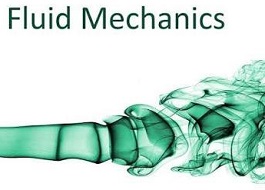
Advanced Fluid Mechanics
Advanced Fluid Mechanics is a branch of mechanical engineering that studies
the behavior of liquids and gases under complex conditions, including turbulence,
high-speed flow, heat transfer, pressure variations, and fluid–structure interaction.
It is essential in aerospace engineering, automotive design, power generation,
chemical processing, energy systems, and computational engineering.
1. Major topics in Advanced Fluid Mechanics:
Turbulence and Boundary Layers: Study irregular fluid motion, eddies, wall friction,
and flow separation. Important for reducing drag and improving aerodynamic performance.
Computational Fluid Dynamics (CFD): Use numerical methods and computers to solve fluid-flow
equations. Applications include aircraft design, cooling systems, and wind turbines.
Compressible and High-Speed Flow: Analyze fluids whose density changes significantly
with pressure and temperature, especially in supersonic aircraft, rockets, and gas turbines.
Fluid–Structure Interaction (FSI):
Study how flowing fluids exert forces on structures and how structural deformation
changes the flow. Used in aircraft wings, bridges, turbines, and pipelines.
Advanced Heat and Mass Transfer:
Investigate the interaction of fluid motion with temperature changes,
chemical species, and energy transport.
2. Fundamental equations: Advanced fluid mechanics relies on conservation laws
and constitutive relationships.
Describes how temperature and internal energy change due to fluid motion,
heat conduction, and energy dissipation.
3. Industrial applications: Aerospace engineering:
Aircraft aerodynamics, rocket propulsion, jet engines and shock-wave analysis.
Automotive engineering: Drag reduction, engine cooling, combustion,
and battery thermal management.
Energy engineering: Wind turbine optimization, hydroelectric systems, gas turbines,
and pipeline flow.
Chemical and process engineering: Mixing, multiphase flow, heat exchangers,
and fluid transport.
5. How AI and machine learning are changing fluid mechanics:
AI/ML can complement traditional fluid mechanics by helping engineers:
- Predict velocity, pressure, and temperature fields.
- Reduce the computational cost of repeated CFD simulations.
- Detect flow separation and identify potential equipment failures.
- Optimize aircraft shapes, turbine blades, and cooling channels.
- Develop physics-informed neural networks and reduced-order models.
Wishing you all the best,
http://www.seeyourneeds.in