Advanced Materials Engineering
Advanced Materials Engineering is a branch of engineering that focuses on designing,
developing, testing, and improving materials with special properties for modern
industrial and technological applications. It combines materials science,
mechanical engineering, chemistry, physics, and computational simulation.
1. Major Types of Advanced Materials:
Composite Materials: Materials formed by combining two or more constituents
to achieve improved strength, stiffness, or reduced weight.
Examples: Carbon-fiber composites, fiberglass, reinforced polymers.
Applications: Aircraft, automobiles, wind turbine blades, sports equipment.
Advanced Ceramics: Materials designed for high-temperature stability,
hardness, wear resistance, and chemical resistance.
Examples: Silicon carbide, silicon nitride, zirconia.
Applications: Turbine components, cutting tools, medical implants, electronic substrates.
Advanced Metals and Alloys: Metals engineered for exceptional strength,
corrosion resistance, toughness, or high-temperature performance.
Examples: Titanium alloys, nickel superalloys, high-entropy alloys.
Applications: Jet engines, power plants, medical devices, industrial machinery.
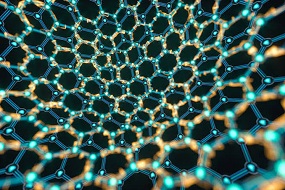
Nanomaterials: Materials engineered at extremely small scales, often with
distinctive electrical, optical, mechanical, or chemical properties.
Examples: Graphene, carbon nanotubes, nanoparticles.
Applications: Sensors, batteries, coatings, electronics, energy storage.
Smart Materials: Materials that respond to temperature, stress, electric fields,
magnetic fields, or other external stimuli.
Examples: Shape-memory alloys, piezoelectric materials, electrochromic materials.
Applications: Robotics, actuators, vibration control, medical devices.
2. Important Areas of Advanced Materials Engineering:
Materials characterization: Understand material structure and properties.
Computational materials science Predict properties using mathematical models and software.
Metallurgy and alloy design: Develop high-performance metal alloys.
Polymer engineering: Create lightweight, durable, functional polymers.
Surface engineering: Improve wear, corrosion, and thermal resistance.
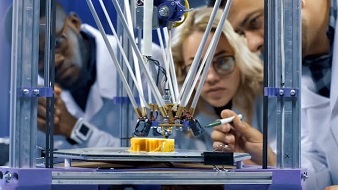
Additive manufacturing: Build components using 3D printing.
Biomaterials: Develop materials for implants and medical devices.
Energy materials: Improve batteries, fuel cells, solar cells, and hydrogen technologies.
Nanotechnology: Engineer materials at the nanoscale.
Sustainable materials: Reduce environmental impact and improve recyclability.
3. Applications Across Industries:
Aerospace and Defence: Lightweight composites, heat-resistant alloys,
thermal protection systems, and high-strength structural materials.
Automotive and Electric Vehicles: Battery materials, lightweight body structures,
wear-resistant components, and thermal management materials.
Healthcare: Biocompatible implants, artificial joints, tissue scaffolds,
and drug-delivery materials.
Wishing you all the best,
http://www.seeyourneeds.in