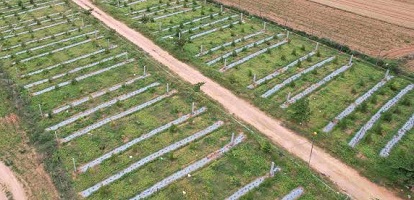
Agricultural land investing means purchasing farmland or agricultural plots with the
goal of earning returns through land appreciation, farm income, leasing, or future
development potential.
1. How Agricultural Land Can Generate Returns: Land appreciation:Land value increases over time
Crop income: Farming generates annual agricultural revenue
Lease/rent: Land is leased to farmers, Orchards: Fruit crops can generate recurring income
Agri infrastructure: Warehouses, nurseries, or permitted farm-related activities may add value
Future conversion: In some locations, legally permitted conversion to
2. Major Advantages: Tangible asset: You own physical land.
Potential inflation hedge: Land values and agricultural output can rise over long periods.
Potential dual return: Appreciation + agricultural income.
Limited supply: Usable agricultural land is finite.
Long-term wealth building: Suitable for investors with a long investment horizon.
3. Major Risks: Agricultural land is not automatically a safe investment.
Clear ownership, Previous sale deeds, Encumbrances, Pending litigation,
Land classification, Survey boundaries, Mutation/revenue records,
Restrictions on purchase and transfer, Liquidity risk.
Crop income can be affected by: Drought, Floods, Pests, Disease, Commodity prices,
Input costs, Water availability, Location risk.
A cheap plot can remain cheap for decades if it lacks: Roads, Irrigation, Electricity.
Nearby markets, Transportation, Economic development, Regulatory risk.
Land-use rules, zoning, acquisition rules, and agricultural-land ownership restrictions
vary significantly by state and location in India.
4. What to Look for in Indian Agricultural Land:
A strong investment candidate generally has:
Good title + reliable water + road access + productive soil + reasonable purchase price +
strong local demand + long-term development potential.
Pay particular attention to water availability. A cheaper parcel with unreliable water
may be inferior to a more expensive parcel with dependable irrigation.
5. A Practical Investment Strategy: For a long-term investor, consider this sequence:
1. Define objective → 2. Select region → 3. Research land prices → 4. Verify title →
5. Verify water → 6. Inspect soil and access → 7. Calculate agricultural income →
8. Estimate all transaction costs → 9. Check legal restrictions → 10. Negotiate →
11. Conduct professional due diligence → 12. Purchase.
Calculate: Total investment = Purchase price + registration/stamp costs + brokerage +
development + fencing + irrigation + maintenance + financing costs.
Then compare the expected net annual income and potential appreciation with alternatives
such as equities, bonds, REITs, and other real estate.
6. Best Agricultural Land Investment Models:
🌾 Productive farmland
Buy established agricultural land and lease it to a farmer.
Best for: relatively passive agricultural exposure.
🍋 Orchard land: Develop mango, citrus, coconut, guava, or other suitable orchards.
Best for: investors willing to wait several years for mature production.
🌱 High-value farming:
Greenhouses, protected cultivation, vegetables, flowers, or specialty crops can potentially
produce higher revenue—but require significantly more management and capital.
🏞️ Land appreciation strategy:
Buy land in an agriculturally strong region with improving infrastructure and hold for
many years. Best for: capital appreciation rather than immediate income.
Wishing you all the best,
http://www.seeyourneeds.in