Applications aerospace
Applications of Structural and Thermal Analysis in Aerospace Engineering
Structural and thermal analysis are essential in aerospace engineering because aircraft,
spacecraft, rockets, and satellites must withstand extreme mechanical loads, vibration,
pressure, and temperature variations while remaining lightweight and reliable.
1. Major aerospace applications:
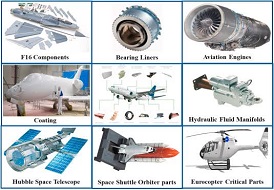
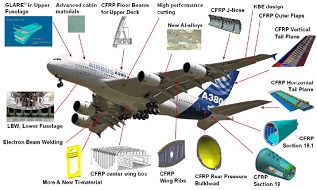
1. Aircraft structures
- Analyze wings, fuselage, landing gear and tail assemblies.
- Predict stress, strain, deformation and buckling.
- Ensure structural strength during takeoff, landing and turbulence.
- Reduce weight without compromising safety.
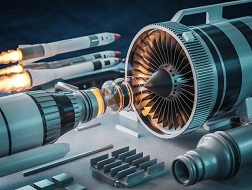
2. Rocket engines and propulsion:
- Analyze combustion chambers, nozzles and turbine components.
- Predict extreme temperatures and thermal stresses.
- Evaluate cooling channels and heat-resistant materials.
- Prevent cracking, overheating and component failure.
3. Satellites and spacecraft:
- Study temperature variations between sunlight and shadow.
- Analyze solar panels, antennas, frames and equipment mounts.
- Design radiators, insulation and thermal-control systems.
- Maintain reliable operation in the space environment.
4. Jet engines and turbine blades:
- Calculate centrifugal stress and aerodynamic loads.
- Simulate heat transfer and thermal expansion. - Assess creep,
fatigue and oxidation risks.
- Improve engine efficiency and component life.
5. Spacecraft re-entry and heat shields:
- Predict intense aerodynamic heating. - Analyze thermal protection materials.
- Model temperature gradients and thermal deformation.
- Protect spacecraft structures and occupants.
3. Common software used: Structural, thermal, vibration, CFD and coupled simulations.
Nonlinear mechanics, contact, fatigue-related studies and advanced material behavior.
Simcenter Nastran: Aircraft structural analysis, vibration, modal response and
aeroelastic studies.
MSC Adams: Landing gear mechanisms, moving assemblies and multibody dynamics.
4. Example: Aircraft wing structural and thermal analysis:
A typical engineering workflow is:
1. Create the 3D model: Wing geometry, ribs, spars and skin,
2. Define materials and mesh: Aluminum alloys, titanium or composites,
3. Apply loads and temperatures: Aerodynamic pressure, fuel loads and temperature fields.
4. Run the simulation: Finite Element Analysis (FEA) and thermal calculations.
5. Evaluate results: Stress, deformation, temperature, fatigue life and safety margins.
5. Career opportunities:
These skills are relevant to aerospace companies, aircraft manufacturers, engine developers,
space research organizations and engineering simulation firms.
- Structural Analysis Engineer, - Thermal Analysis Engineer, - FEA Simulation Engineer,
- Aerospace Stress Engineer, - CFD and Heat Transfer Engineer,
- Fatigue and Fracture Analysis Engineer, - Multiphysics Simulation Engineer.
In India, these skills can be relevant to organizations such as ISRO, HAL, DRDO and
aerospace suppliers, depending on the role's eligibility and requirements.
Wishing you all the best,
http://www.seeyourneeds.in