Backhoe
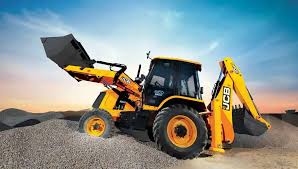
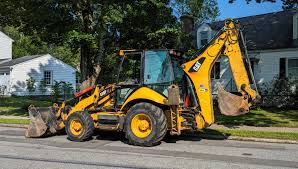
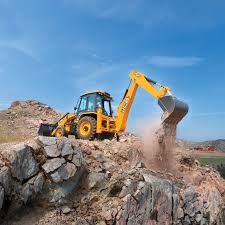
The Backhoe is one of the most commonly seen pieces of Construction Equipment
because of its Adaptability. Its Cousin, the front end Loader, is also a smaller
Piece of Equipment that has a Broad Bucket like the one on the front of the Backhoe
for Hauling Soil, Debris, and Materials, and Lifting them up into Trucks.
Backhoe is Hydraulic Pressure
Hydraulic Lines, a Reservoir of Hydraulic Fluid, a Pump, and a Series of Pistons
allow the Machine Operator to extend its Arm and Cut through Soil with a toothed
Bucket. The Pump Exerts Pressure on the Hydraulic Fluid, and Operating the Levers
opens a valve that Releases the Oil into a Piston.
Backhoe Standard Equipment:
Backhoe Standard Equipment is a Narrow Bucket on the Rear end and a Loader
on the Front. The Operator effectively makes either Device the Working end by
simply Rotating his Chair and Operating a different set of Controls. If the Bucket
is being used, the Flat Front end of the Loader is set down on the ground
to Stabilize the Vehicle.
Raw Materials:
Backhoe Manufacturers purchase many of its Parts as SubAssemblies, or Partially
Assembled Smaller Units, that the Manufacturer then completes. The Manufacture of
SubAssemblies may be done by a number of independent Firms that Specialize in
Metal Fabrication, Hydraulics, or other Specialties.
Thicker Steel Plates:
The thicker Steel Plates are used for Structural Parts of the Backhoe, and the
thin Steel is for Housings and Cosmetics. Plastics Comprise the Trim in the Interior
and around the Exterior of the Cab and a Temperature Resistant Composite Plastic
is used for the Air Cleaner Housing. Seals are made of a High Grade Elastomeric
Plastic that can Withstand high Temperatures and Pressures.
Design:
Basic Design, of the Backhoe was clearly defined by the Construction Industry that
uses it. Leading Manufacturers like Case Corporation Rely on Surveys among their
Customers to Collect Data Leading to Design Modifications. The Company defines the
Product based on a list of Attributes, and these Attributes are Ranked in importance
and in Actual Performance or Delivery by the Customers.
The Manufacturing Process:
Receiving and Assembling the SubAssemblies:
Manufacturing begins at the Receiving Docks of the Factory. Purchased Components are
Unloaded, Inventoried, and Stored at a number of Docks and then directed toward
Subassembly Cells. These Cells are a number of Work areas Where Components and
SubAssemblies are put together in more units or Sub Assemblies.
Canopy type Cab:
The Components of a Canopy type Cab will go to one Cell where the Steel Canopy
Components are cleaned of Oil. One side of the Canopy is tack Welded together by
a Robotic Welder and then Final Welded. While the Robot Welds, the Subassembly
Operator Loads the Components for the other side. It is Welded in two steps,
and the parts of the Canopy are Welded together, also in a tack and final Weld.
Painting and Curing:
As the Structural SubAssemblies are Completed, all are Conveyed through the Painting
Center. The Pieces are Primed using an Electrical Deposition Process that Provides
a Protective Paint Layer. This is called an "E-coat" for the Electrical method and
is also Termed a Robust Process. The Final Coat of Paint is applied manually.
Hydraulic Cylinders and Radiator:
Fittings are added in a Subassembly area, where they are E-coated, Hand-Painted,
and Oven Cured. Connections are added so that Water Lines may be attached to the
Radiator and to the Engine. Other SubAssemblies for the Cooling, Fuel, and
Lubrication Systems are Fumished with appropriate Connections, attached Lines,
and sometimes, Pumps and Valves.
Final Assembly:
All of the SubAssemblies meet each other in the Assembly area. There is No Lost
Motion for the Assemblers. Each Chassis is set on its on Assembly Cart with its
Front and Rear Axles and Built up from the Deck to the Cab. The Cab and Canopy are
Assembled at another area; when each unit is Finished, it is Carried to the Chassis
Assembly Line and attached to the Completed Chassis.
Engine, Radiator, Transmission, Hydraulic System are Mounted
onto the Chassis:
Other Systems like the Fuel, Coolant, and exhaust Components are also Mounted on the
Chassis. Hoses and other Fittings are Attached, and Supporting Flanges or Brackets
are added as Appropriate. The two Buckets the Backhoe and the Loader are the last of
the large Components to be put in Place, using Large Pins that Fit the inset Lugs
and Bushings. Their Hydraulics are Fitted, Tightened, and Tested.
Pre Painted in the Subassembly Stage:
Although all the Major Parts were Pre Painted in the Subassembly Stage, the finished
Backhoe makes a last Visit to the Paint booth for a Final Coat. Decals and Warning
Labels are applied to Specific Locations based on a Template, and each Completed
Backhoe is Driven off the Assembly line on its own Power to the Testing area
for Evaluation.
Station Control Documentation:
They are logged in and inspected at the Receiving Dock, then Assemblers inspect
to make Sure they Meet the specified Criteria at each stage of Assembly.
Each Assembler on the Line has the Authority to Reject Parts or SubAssemblies
Throughout the Process.
Manufacturer also Performs Random Audits:
Inspectors may Look at Components, Entire Systems, or SubAssemblies and Pull them
off the Line for inspection. The Purposes of these Audits are to Check the items
against Specifications, Confirm the Observations of the Assemblers, train Assemblers
in the Finer Points of inspections, and maintain the High Standards established
by the Manufacturer.
Final Check is Performed on each Backhoe:
The Inspector uses a checklist to Validate a set of Criteria for the Machine function;
for example, there should not be any Leaks, Torque Levels should be appropriate to
the Pieces, and Moving Parts should move according to a set of Clearly defined
Motions and Limits of Motion.
ByProducts/Waste:
The Derivatives or Models may differ in Size, Scale, Horsepower, or Engine
Displacement. Current line of Backhoes includes a Model that is a Loader only.
With a three Point Hitch and Landscaping Tools that are Manufactured as a
Separate set of Accessories, the Loader becomes a Loader or Landscaper, and
its uses are Multiplied.
Quality Function Deployment:
Three or four Prototypes of the new Design are Built, and Customers are invited
to Visit the Manufacturing Plant for Customer Clinics, During which the Proto types
are Examined and Tested. The Manufacturer then Performs its own Durability,
Reliability, and other Tests and analyzes Cost and Manufacturability
of the Redesigned Product.
Wishing you all the best,
http://www.seeyourneeds.in