**Blockchain** is a distributed digital ledger technology that stores data in blocks linked together in chronological order.
It enables secure, transparent, and tamper-resistant record-keeping without relying on a central authority.
How Blockchain Works
1. **Transaction Creation** – A user initiates a transaction.
2. **Verification** – Network participants (nodes) validate the transaction.
3. **Block Formation** – Verified transactions are grouped into a block.
4. **Consensus Mechanism** – Nodes agree on the validity of the block using methods like:
* **Proof of Work (PoW)**
* **Proof of Stake (PoS)**
5. **Chain Addition** – The new block is added to the blockchain permanently.
Key Features of Blockchain
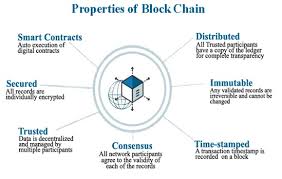
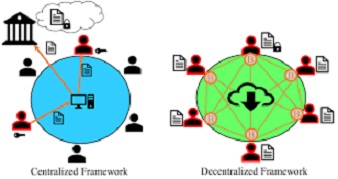
* **Decentralization** – No single central authority controls the system.
* **Transparency** – Transactions can often be publicly verified.
* **Security** – Cryptography protects data integrity.
* **Immutability** – Once recorded, data is difficult to alter.
* **Traceability** – Easy to track transactions over time.
Decentralised Technologies
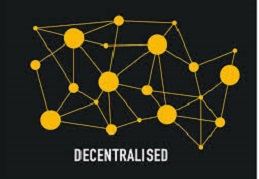
These are technologies where control is distributed rather than managed by one central system.
Examples include:
* Bitcoin – A decentralized digital currency.
* **Smart Contracts** – Self-executing agreements on blockchains.
* **Decentralized Finance (DeFi)** – Financial services like lending, borrowing, and trading without banks.
* **Decentralized Applications (DApps)** – Apps running on distributed networks.
* **Distributed Storage** – Systems where files are stored across multiple nodes.
Applications: * Banking and payments, * Supply chain tracking, * Healthcare records,
* Voting systems, * Digital identity, * Real estate, * Cybersecurity.
Challenges: ✖ Scalability issues, ✖ High energy use (some blockchains)
✖ Regulatory uncertainty, ✖ Complexity and adoption barriers
Future of Blockchain: Blockchain and decentralised technologies are expanding into finance, healthcare, logistics,
digital identity, and Web3 systems. They may improve trust, automation, and secure data sharing across industries.
In simple terms: Blockchain = secure shared ledger; decentralised technologies = systems that remove central control.