Bridge Bearings and Fenders

Bridge Bearings and Fenders


Bridge Bearings and Fenders
Bridge Bearings and Fenders are critical engineering components used in bridges, ports,
marine structures, and transportation infrastructure. While bridge bearings support and
transfer structural loads, fenders protect marine structures and vessels from impact damage.

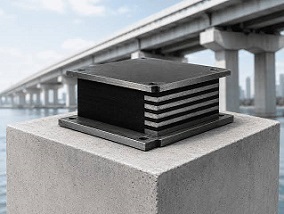
1. Bridge Bearings: Bridge bearings are structural devices installed between the bridge superstructure (deck)
and substructure (pier or abutment). They safely transfer loads while allowing controlled movement caused
by traffic, temperature changes, wind, seismic activity, and structural deflection.
Functions: * Support vertical loads, * Transfer horizontal forces,
* Accommodate thermal expansion and contraction, * Allow controlled rotation,
* Reduce stress concentration, * Improve bridge durability.

Add: Anti-Aging Self Tanner

Types of Bridge Bearings:
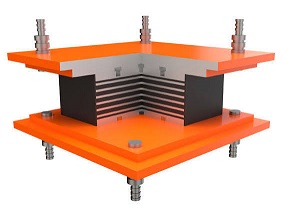
1. Elastomeric Bearings: * Made from natural or neoprene rubber with steel laminates,
* Low maintenance, * Cost-effective, * Common in highway bridges.
Advantages: * No lubrication, * Corrosion resistant,* Easy installation, * Long service life.
Applications: * Highway bridges, * Railway bridges, * Flyovers, * Pedestrian bridges.
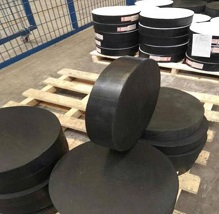
2. Pot Bearings: Contain an elastomeric disc confined inside a steel pot.
Features: * High load capacity, * Accommodates rotation, * Suitable for large bridges.
Applications include: * Long-span bridges, * Metro bridges, * Heavy traffic bridges.
3. Spherical Bearings: Use a spherical sliding surface for rotation.
Advantages: * Handles very large loads, * Excellent rotational capability, * Suitable for seismic regions.
Applications: * Cable-stayed bridges, * Suspension bridges, * Major infrastructure projects.
4. Disc Bearings: Use polyurethane discs instead of elastomer.
Applications: * Heavy-load bridges, * Railway bridges, * Industrial structures.
5. Sliding Bearings: Use low-friction materials such as PTFE.
Purpose: * Permit longitudinal movement, * Reduce friction, * Compensate for thermal expansion.

Materials Used: * Natural Rubber, * Neoprene Rubber, * Steel, * Stainless Steel,
* PTFE (Teflon), * Polyurethane, * Bronze.

Add: Control Heart Burn

Manufacturing Process: 1. Rubber compounding, 2. Steel plate preparation, 3. Bonding rubber to steel,
4. Vulcanization, 5. Machining, 6. Surface coating, 7. Testing, 8. Quality inspection.
Testing Standards: Typical tests include:
* Compression test, * Shear test, * Rotation test, * Fatigue test,
* Aging test, * Bond strength test.

Applications: * Highway bridges, * Railway bridges, * Flyovers, * Metro rail systems,
* Industrial structures, * Elevated roads.

Marine Fenders: Marine fenders are energy-absorbing systems installed on docks, harbors,
jetties, and offshore platforms to protect both vessels and structures during berthing.
Functions: * Absorb impact energy, * Reduce berthing forces, * Prevent structural damage,
* Protect ships, * Extend service life, * Improve operational safety.

Add: FOCUS ATTENTION MASTERY

Types of Marine Fenders:
Cylindrical Fenders: * Simple design, * Easy installation, * Economical.
Applications: * Small ports, * Fishing harbors, * Tugboats.
Cone Fenders: Advantages: * High energy absorption, * Low reaction force,
* Excellent durability, Applications:* Container terminals, * Bulk terminals, * Large ports.
Cell Fenders: Features: * High performance, * Long lifespan, * Excellent stability.
Applications: * Commercial ports, * Oil terminals, * Cargo berths.
Arch Fenders: Suitable for: * Small vessels, * Ro-Ro terminals, * Inland waterways.
Pneumatic Fenders: Characteristics: * Floating design, * Easy relocation,
* Suitable for ship-to-ship transfer, Applications: * Naval operations, * Offshore platforms, * Tankers.
Foam-Filled Fenders: Advantages: * Unsinkable, * Lightweight, * Low maintenance.
Applications: * Marinas, * Cruise terminals, * Offshore installations.

Materials Used: * Natural Rubber, * Synthetic Rubber, * EPDM Rubber, * Neoprene Rubber,
* Polyurethane, * Steel Chains, * UHMW-PE Pads.

Manufacturing Process: 1. Rubber mixing, 2. Molding, 3. Vulcanization, 4. Reinforcement installation,
5. Surface finishing, 6. Inspection, 7. Performance testing.

Add: Lose Weight

Performance Parameters: * Energy absorption, * Reaction force, * Compression deflection,
* Durability, * Abrasion resistance, * Weather resistance, * Saltwater resistance.
Applications: * Commercial ports, * Container terminals, * Naval bases, * Oil and gas terminals,
* LNG terminals, * Shipyards, * Marinas, * Offshore platforms.

Benefits:
Bridge Bearings: * Increase bridge lifespan, * Reduce maintenance costs, * Improve structural safety,
* Accommodate thermal movement, * Enhance seismic performance.
Marine Fenders: * Protect vessels and infrastructure, * Reduce repair costs,
* Improve berthing safety, * Provide long service life, * Operate reliably in harsh marine environments.

Relevant Standards:
Bridge Bearings: * EN 1337, * AASHTO LRFD Bridge Design Specifications, * IRC:83.
Marine Fenders: * PIANC Guidelines,
* International Organization for Standardization standards for relevant materials and testing.

Add: Helps Lower Your Blood Pressure

Bridge bearings and marine fenders are indispensable infrastructure components. Bridge bearings
ensure that bridges safely accommodate loads and movement over decades of service, while marine
fenders protect ports, ships, and offshore facilities by efficiently absorbing berthing energy,
contributing to safer and more durable transportation infrastructure.


Wishing you all the best,
http://www.seeyourneeds.in