Computational Mechanics
Computational Mechanics is the use of mathematics, physics, numerical methods,
and computer simulations to analyze how mechanical systems behave under forces,
motion, heat, fluids, and other physical effects.
It connects mechanical engineering + applied mathematics + computer science.
1. Major areas:
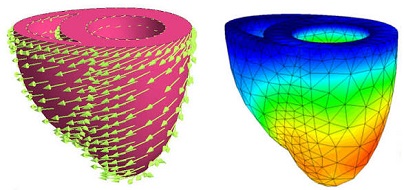
Finite Element Method (FEM) – structures, stress, deformation, vibration.
Computational Fluid Dynamics (CFD) – airflow, water flow, aerodynamics.
Computational Solid Mechanics – deformation, fracture, plasticity, contact.
Multibody Dynamics – mechanisms, robots, vehicles, moving components.
Computational Heat Transfer – conduction, convection, radiation.
Computational Acoustics – sound and vibration.
Computational Materials Mechanics – material behavior and failure.
Computational Fracture Mechanics – cracks and structural failure.
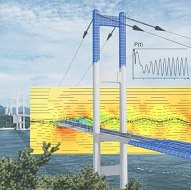
Fluid–Structure Interaction (FSI) – interaction between fluids and structures.
Nonlinear Computational Mechanics – large deformation, nonlinear materials,
complex contact.
For example, an aircraft wing can be modeled computationally to determine:
Stress distribution, Deformation, Vibration modes, Fatigue life,
Buckling risk, Aerodynamic forces.
3. Software and programming: Common tools include:
ANSYS, Abaqus, COMSOL Multiphysics, OpenFOAM, MATLAB, Python,
C/C++, MSC Adams, LS-DYNA.
Programming is increasingly important because engineers can develop custom solvers,
optimization algorithms, simulation automation, and AI-assisted engineering models.
6. Applications:
Computational mechanics is widely used in aerospace, automobiles, robotics, energy,
manufacturing, civil engineering, biomechanics, electronics, and renewable energy.
A useful learning progression is:
Engineering Mechanics → Differential Equations → Numerical Methods →
FEM/CFD → Programming → Multiphysics → Optimization → AI + Computational Mechanics.
It is one of the important foundations for the future of simulation-driven
engineering and digital engineering.
Wishing you all the best,
http://www.seeyourneeds.in