Concrete:
Different types of Concrete are Categorized according to their method of Installation.
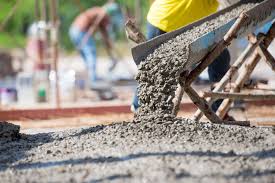
Ready or Pre Mixed Concrete is batched and Mixed at a central Plant before it is
delivered to a Site. Because this type of Concrete is sometimes transported in an
agitator truck, it is also known as Transit Mixed Concrete. Shrink Mixed Concrete
is partially Mixed at the central Plant, and its Mixing is then completed en route
to the Site.
Raw Materials: Structural Concrete normally
contains one part Cement to two parts fine Mineral aggregate to four parts coarse
Mineral Aggregate, though these Proportions are often varied to achieve the Strength
and Flexibility required in a particular setting.
Concrete contains: a wide range of chemicals
that imbue it with the characteristics desired for specific applications. Portland
Cement, the kind most often used in Concrete, is made from a combination of a
Calcareous Material usually Limestone and of Silica and Alumina found as Clay
or Shale. It can also contain iron Oxide and Magnesia.
Fly ash: a Coal burning Power Plant byproduct
that contains an AluminoSilicate and small amounts of Lime, is also being tested
as a Possible Pozzolanic Material for Cement. Combining fly ash with Lime (CaO)
in a Hydrothermal Process also Produces Cement.
Preparing Portland Cement:
The Limestone, Silica, and Alumina that make up Portland Cement are Dry Ground into
a very fine Powder, Mixed Together in Predetermined Proportions, Preheated, and
Calcined. Next the Material is Burned in a Large Rotary Kiln at 2,550 degrees
Fahrenheit. At this temperature, the Material Partially fuses into a substance
known as Clinker. A modern Kiln can produce as much as 6,200 tons of Clinker a day.
Mixing: The Cement is then Mixed with the
other Ingredients, Aggregates, Admixtures, Fibers, and Water. Aggregates are
Pre blended or added at the Ready mix Concrete Plant under normal operating
conditions. The mixing operation uses Rotation or stirring to coat the surface
of the aggregate with Cement Paste and to blend the other Ingredients uniformly.
A variety of batch or Continuous Mixers are used.
Fibers: If desired, can be added by a variety
of Methods including direct Spraying, Premixing, Impregnating, or hand laying up.
Silica fume is often used as a Dispersing or Densifying Agent.
Calcining: The Material undergoes two heating
steps Calcining and Burning. In Calcining, the Materials are Heated to a high
Temperature but do not fuse Together. In Burning, however, the Materials Partially
Fuse Together, Forming a Substance known as "Clinker". The Clinker is then Ground
in a Ball Mill a Rotating Steel Drum Filled with Steel Balls that Pulverize
the Material.
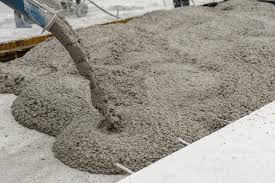
Whether chutes or buggies are used: Position
is important in achieving these goals. The rates of placing and of compaction
should be equal; the latter is usually accomplished using internal or external
vibrators. An internal Vibrator uses a Poker housing a Motor driven Shaft.
When the Poker is inserted into the Concrete, Controlled Vibration occurs
to Compact the Concrete.
Curing:
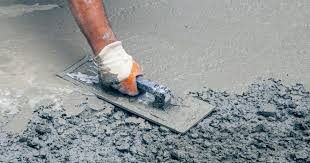
Once it is Placed and Compacted, the Concrete must Cured before it is Finished
to make Sure that it does not Dry too Quickly. Concrete Strength is influenced
by its Moisture level during the Hardening process as the Cement Solidifies,
the Concrete shrinks. If Site Constraints Prevent the Concrete from Contracting,
Tensile stresses will develop, weakening the Concrete. To minimize this problem,
Concrete must be kept Damp during the several days it requires to set and harden.
Quality Control:
At the Cement Production Factory, the Proportions of the various Raw Materials
that go into Cement must be checked to achieve a consistent Kiln Feed, and
samples of the Mix are Frequently examined using X-ray Fluorescence analysis.
Wishing you all the best,
http://www.seeyourneeds.in