How Crane is made
Crane:
A crane is a machine that is capable of raising and lowering heavy objects and moving them horizontally.
Cranes are distinguished from hoists, which can lift objects but that cannot move them sideways. Cranes
are also distinguished from conveyors, that lift and move bulk materials, such as grain and coal, in
a continuous process. The word crane is taken from the fact that these machines have a shape similar
to that of the tall, long-necked bird of the same name.
Raw Materials:
The most important substance used to manufacture cranes is steel. Steel is an alloy of iron and a small
amount of carbon. For structures that do not require very high strength, a common form of steel
known as carbon steel is used. By definition, carbon steel contains less than 2% of elements other
than iron and carbon. Carbon steel exists in a wide variety of forms. The most important factor
in determining the properties of carbon steel is the amount of carbon present, which ranges from
less than 0.015% to more than 0.5%.
Design:
Very few machines exist in as wide a variety of designs as cranes. Before the crane is constructed,
the manufacturer must consider the site where it will be used and the weight it will need to lift.
Cranes are often modified to suit the needs of the user.
The Manufacturing Process:
Making steel components:
Molten steel is made by melting iron ore and coke in a furnace, then removing most of the carbon by
blasting oxygen into the liquid. The molten steel is then poured into large, thick-walled iron molds,
where it cools into ingots.
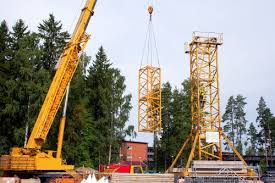
An external tower crane:
The cables used to lift weights are made from steel wires. To make wire, steel is first rolled
into a long rod. The rod is then drawn through a series of dies which reduce its diameter to
the desired size. Several wires are then twisted together to form cable.
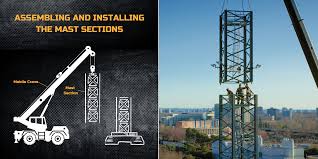
Assembling the crane:
A crane is put together from the necessary components. As the crane moves along the assembly line,
the steel components are welded or bolted into place. The exact procedures followed during this
process vary depending on the type of crane being assembled. For a mobile crane, the components
are then assembled to a standardized truck or crawler of the appropriate type.
Quality Control:
Safety is the most important factor to be considered during crane manufacturing.
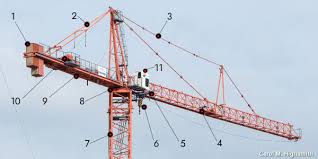
An internal tower crane: ensure that it has no structural flaws that would weaken the crane.
Welds and bolts joints are inspected as well. A completed crane is first tested without a weight
to ensure that all of its components operate properly. It is then tested with a weight to ensure
that the crane is able to lift heavy objects without losing stability.

Wishing you all the best,
http://www.seeyourneeds.in