HOME
Facts of Prosperity
Decarbonization
Decarbonization
**Decarbonization** is the process of reducing or eliminating carbon dioxide (CO₂) and other
greenhouse gas emissions from human activities, particularly in energy production, transportation,
industry, agriculture, and buildings. Its primary goal is to mitigate climate.
change and achieve **net-zero emissions**.
Why Decarbonization Matters:
* Reduces global warming and climate risks
* Improves air quality and public health
* Enhances energy security
* Promotes sustainable economic growth
* Supports international climate goals such as the Paris Agreement
Major Sources of Carbon Emissions:
1. Electricity generation (coal, oil, natural gas)
2. Transportation (cars, trucks, ships, aircraft)
3. Industrial processes (steel, cement, chemicals)
4. Buildings (heating, cooling, lighting)
5. Agriculture and land-use changes
Add: The Healthy Heart Solution Kit
Key Decarbonization Strategies:
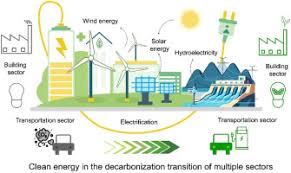
1. Clean Energy Transition: * Solar power, * Wind power, * Hydropower, * Geothermal energy, * Nuclear energy
2. Energy Efficiency: * Smart buildings, * Efficient appliances, * LED lighting, * Industrial optimization.
3. Electrification: * Electric vehicles (EVs), * Electric heating systems, * Industrial electrification.
4. Carbon Capture and Storage (CCS): * Capturing CO₂ from industrial facilities, * Storing carbon underground,
* Direct Air Capture technologies.
5. Sustainable Transportation: * Public transit, * Cycling infrastructure, * Electric mobility, * Sustainable aviation fuels.
6. Nature-Based Solutions: * Reforestation, * Afforestation, * Wetland restoration, * Sustainable agriculture.
Decarbonization Across Industries:
| Sector | Decarbonization Approach |
| ------------- | --------------------------------------- |
| Energy | Renewable electricity generation |
| Transport | EVs, hydrogen, public transit |
| Manufacturing | Green hydrogen, electrification, CCS |
| Buildings | Efficient design and renewable energy |
| Agriculture | Precision farming and methane reduction |
Add: “59 Times Stronger Than Regular Curcumin”
Emerging Technologies: * Green hydrogen, * Advanced battery storage, * Smart grids,
* Carbon capture technologies, * Sustainable fuels, * AI-driven energy management.
Challenges: * High upfront investment costs, * Grid modernization requirements, * Technology scalability,
* Policy and regulatory barriers, * Workforce transition and reskilling.
Benefits: * Reduced emissions, * Cleaner environment, * New job creation,
* Energy independence, * Long-term economic resilience, * Improved public health.
Future Outlook: Many countries, companies, and organizations are pursuing net-zero targets between 2050 and 2070.
Decarbonization is expected to drive major transformations in energy systems, transportation, manufacturing,
and urban development, making it one of the most important global sustainability initiatives of the 21st century.
Wishing you all the best,
http://www.seeyourneeds.in