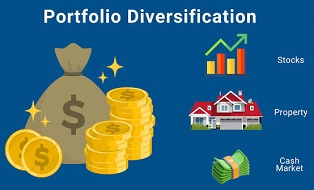
Diversify Your Portfolio
Portfolio diversification means spreading your money across different investments so that
one poor-performing investment does not have an outsized impact on your overall wealth.
1. Diversify across asset classes: Consider combining:
Equities – long-term growth.
Debt/bonds – relatively more stable income.
Gold – diversification and a potential hedge during some market conditions.
Cash/liquid funds – liquidity and emergency needs.
Real estate – where appropriate for your financial situation,
2. Diversify within stocks: Don't put your entire equity allocation into one company
or sector. You can spread exposure across areas such as:
3. Use mutual funds or ETFs:
For investors who don't want to select many individual stocks, broad-market
index funds and ETFs can provide diversification across numerous companies.
4. Avoid over-diversification:
Owning dozens of similar stocks or funds doesn't necessarily improve
diversification. Check whether different investments actually have
different underlying holdings and risks.
5. Match diversification to your goals: Your allocation should depend on:
Goal → Time horizon → Risk tolerance → Asset allocation → Investments.
These percentages are illustrative, not a recommendation. Rebalance
periodically when your allocation moves substantially away from
your intended targets.
Key principle: Diversification doesn't eliminate investment risk, but it can
reduce the damage caused by concentration in a single company, sector, or asset class.
Available next action:
Create a downloadable DOCX file here in this chat containing the editable prose above.
Wishing you all the best,
http://www.seeyourneeds.in