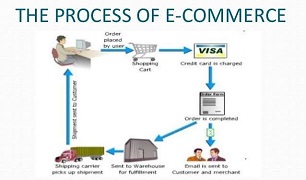
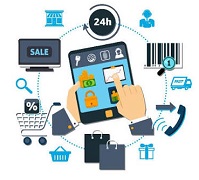
An e-commerce business sells products or services to customers through the internet.
It can be started with relatively low infrastructure compared with a traditional
physical store and can scale from a small side business into a large online company.
1. Major E-Commerce Business Models:
Own Products: Manufacture or source products and sell them online.
Private Label: Buy/manufacture products and sell them under your own brand.
Dropshipping: Supplier ships products directly to customers.
Wholesale: Purchase products in bulk and resell them.
Selling: Sell through platforms such as Amazon, Flipkart, Meesho, etc.
Subscription: Customers pay regularly for recurring products.
Digital Products: Sell courses, templates, software, ebooks, etc.
Print-on-Demand Products are printed only after receiving orders.
2. Products You Could Sell: Some potentially attractive categories include:
Clothing and fashion accessories, Home and kitchen products,
Mobile and computer accessories, Beauty and personal-care products,
Fitness accessories, Handmade products, Agricultural and gardening products,
Industrial and business supplies, Customized gifts, Educational products,
Pet products, Eco-friendly products.
3. How to Start:
Step 1 — Choose a niche: Select a specific customer group and product category
rather than trying to sell everything.
Step 2 — Research demand: Check competitors, pricing, customer reviews,
search demand and potential profit margins.
Step 3 — Find suppliers: Compare manufacturers, wholesalers and distributors on quality,
MOQ, price and delivery reliability.
Step 4 — Calculate unit economics: For example:
Selling price − product cost − shipping − packaging − marketplace/payment fees −
advertising − returns = net profit.
Step 5 — Build your sales channel: You can use your own website, established marketplaces, or both.
Step 6 — Create strong product listings: Use clear photographs, accurate specifications, benefits,
FAQs and persuasive but truthful descriptions.
Step 7 — Start marketing: Consider Google search, social media, influencer marketing,
content marketing, email/WhatsApp marketing and marketplace advertising.
Step 8 — Measure everything: Track conversion rate, customer acquisition cost,
average order value, gross margin, return rate and repeat purchases.
4. Example: Suppose you sell a product for ₹999:
Product cost: ₹400, Packaging: ₹30, Shipping: ₹70, Platform/payment costs: ₹100,
Advertising: ₹150, Other costs: ₹49. Estimated profit = ₹200 per order.
At 500 profitable orders per month, that would be approximately ₹1,00,000/month
before fixed business expenses and taxes.
5. Advantages: Can start relatively small, Access to customers across India and
potentially internationally, No need for a large retail storefront,
Business can operate 24/7, Easy to test multiple products, Potential for
significant scalability, Customer and sales data can help improve decisions.
6. Main Risks: Strong competition, High advertising costs, Product returns and cancellations,
Inventory getting stuck, Cash-flow problems, Supplier quality issues, Shipping delays,
Marketplace dependence, Price competition, Fraud and fake orders.
7. Best Strategy for a Beginner: A practical approach is to start with one focused
product category and a small inventory, test demand, identify the products that
sell consistently, and then gradually expand.
Wishing you all the best,
http://www.seeyourneeds.in