Emergency Fund Planning
An emergency fund is money kept aside specifically for unexpected expenses or temporary loss of income.
It protects you from taking high-interest loans or selling investments at the wrong time.
1. How much should you keep? A practical target is:
Formula:
> Emergency Fund = Essential Monthly Expenses × Target Months
For example, if your essential expenses are ₹30,000/month and you target 6 months:
₹30,000 × 6 = ₹1,80,000
2. What counts as an essential expense?
Include: * Rent/home-loan EMI. * Food and groceries. * Utilities. * Insurance premiums.
* Essential transportation. * Education-related necessities. * Minimum debt payments.
* Necessary medical expenses. * Basic household expenses.
Exclude discretionary spending such as vacations, luxury purchases and entertainment.
3. Where should you keep it?
Your emergency fund should prioritize safety and liquidity, not maximum returns.
Tier 2 — Highly liquid savings:
Keep another 2–3 months in an appropriate savings/liquid-access account.
Tier 3 — Short-term safe instruments: The remaining portion can be placed in suitable low-risk,
easily accessible instruments, depending on your circumstances. Avoid putting your core emergency fund
into equity stocks, penny stocks, small-cap funds, crypto, or other volatile investments.
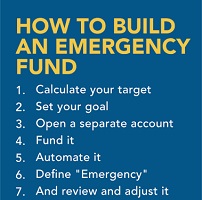
4. How to build it: If you don't have an emergency fund yet:
Calculate your essential monthly expenses.
Set an initial target of 1 month's expenses.
Automate a fixed amount from every salary/income payment. Build toward 3 months.
Gradually increase to 6–12 months if your income or responsibilities warrant it.
Recalculate the target whenever your expenses, income, debts, or family responsibilities change.
5. Keep emergency and investment money separate: A useful financial structure is:
Income → Essential expenses → Emergency fund → Insurance → Debt reduction → Investments →
Discretionary spending. This prevents you from treating your investment portfolio as your emergency fund.
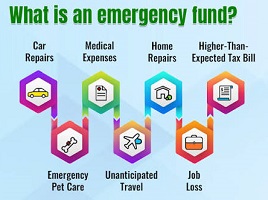
6. When can you use it? Appropriate uses include:
* Sudden job/income loss, * Major unexpected medical expense,
* Essential home or vehicle repair, * Urgent family emergency,
* Unexpected necessary travel, * Essential expense during a temporary financial disruption.
Don't normally use it for: * Shopping, * Holidays, * Gadgets,
* Speculative investments, * Routine lifestyle upgrades.
7. Review it annually: If your essential expenses rise from ₹30,000 to ₹40,000 per month,
a 6-month fund should increase from ₹1.8 lakh to ₹2.4 lakh.
So an emergency fund isn't a "set once and forget" account—it should grow with your financial obligations.
Best starting goal: If you're unsure, aim for 6 months of essential expenses, then adjust upward or
downward based on job stability, dependents, debt and income predictability.
Wishing you all the best,
http://www.seeyourneeds.in