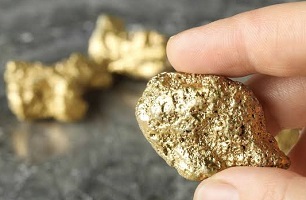
Gold & Precious Metals
Gold and precious metals can play an important role in wealth preservation,
diversification, inflation protection, and portfolio stability. They are different
from stocks or bonds because their value is driven heavily by scarcity, demand,
interest rates, currency movements, and investor sentiment.
1. Major Precious Metals: Metal Common Investment Uses Key Characteristics.
🟡 Gold Wealth preservation, diversification Most widely held precious metal
⚪ Silver Investment + industrial demand More volatile than gold
⚪ Platinum Investment + industry Strong industrial component
⚪ Palladium Investment + automobiles Highly industrial and cyclical
2. Why Invest in Gold? Gold can provide:
Portfolio diversification — its price can behave differently from equities.
Inflation protection — historically viewed as a store of value.
Currency protection — particularly relevant when a currency loses purchasing power.
Crisis protection — demand can increase during periods of economic or geopolitical uncertainty.
Long-term wealth preservation — gold has been used as money and a store of value for thousands of years.
3. Ways to Invest in Gold in India: Physical gold — coins and bars.
Gold jewellery — generally less efficient as an investment because of making charges and
resale considerations.
Gold ETFs — exchange-traded funds designed to track gold prices.
Gold mutual funds/FoFs — mutual funds that invest in gold ETFs.
Digital gold — convenient, but investors should carefully evaluate the provider,
custody structure, fees, and regulatory framework.
Sovereign Gold Bonds (SGBs) — historically an important government-backed gold investment route,
but availability depends on current government issuance and rules.
4. Gold vs Silver:
Gold: Generally less volatile, Strong monetary/store-of-value demand,
Often used as a defensive asset.
Silver: Generally more volatile, Significant industrial demand,
Can benefit from growth in electronics, solar and other industrial applications.
Potentially higher upside, but also higher downside risk.
5. How Much Gold Should a Portfolio Have?
There is no universally correct allocation. A common approach is to treat precious
metals as a diversification component rather than the core of a portfolio.
For example, an investor might consider something like:
Equities → primary growth engine, Bonds/cash → stability and liquidity,
Gold/precious metals → diversification and wealth preservation,
Real estate/REITs → income + tangible-asset exposure.
The appropriate allocation depends on your investment horizon,
risk tolerance, income stability, and existing assets.
6. Important Risks: Gold is not risk-free:
It does not generate dividends or interest like many financial assets.
Prices can fall substantially after strong rallies.
Physical gold has storage and security costs.
Jewellery contains substantial non-gold costs.
ETFs and funds have expenses.
Precious-metal prices can be affected by interest rates, the U.S. dollar,
central-bank activity, industrial demand and global events.
7. A Simple Long-Term Strategy: For a long-term investor, a sensible framework is:
Build emergency savings → eliminate expensive debt → invest regularly in diversified assets →
add an appropriate precious-metals allocation → rebalance periodically.
The key idea is to use gold primarily for diversification and preservation,
rather than expecting it to outperform equities every year.
If you're investing from India, I can also break this down into Gold ETFs vs SGBs
vs physical gold vs digital gold, including costs, taxation, liquidity, risks,
and which may suit different investors in 2026.
Wishing you all the best,
http://www.seeyourneeds.in