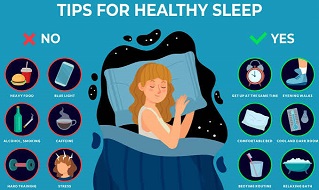
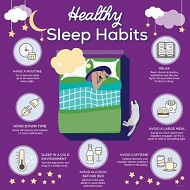
Habits for better sleep:
Good sleep improves your energy, memory, concentration, mood, and overall health.
Developing a consistent sleep routine can help you fall asleep more easily
and wake up refreshed.
1. Maintain a consistent sleep schedule:
Go to bed and wake up at the same time every day, including weekends.
Most adults need 7–9 hours of sleep.
2. Get morning sunlight: Spend 15–30 minutes outdoors in the morning when practical.
Natural light helps regulate your body's internal clock.
3. Exercise regularly: Walking, yoga, and other physical activities can improve sleep quality.
Finish vigorous workouts a few hours before bedtime if they make you feel alert.
4. Reduce screen time before bed: Put away your phone, computer, and television
about 30–60 minutes before sleeping. Choose a calming activity instead.
5. Avoid caffeine late in the day: Coffee, tea, energy drinks, and some soft drinks contain
caffeine. Try avoiding caffeine for at least 6–8 hours before bedtime, or longer
if you are sensitive to it.
6. Eat dinner at a comfortable time: Avoid heavy meals close to bedtime. If you are hungry later,
choose a light snack rather than going to bed uncomfortably full or hungry.
7. Create a sleep-friendly bedroom: Keep your room dark, quiet, and comfortably cool.
Use curtains, earplugs, or a fan if they help you sleep.
8. Follow a relaxing bedtime routine: Read a book, take a warm bath, listen to gentle music,
or do some light stretching to help your body wind down.
9. Manage stress and worries: Try slow breathing, meditation, prayer, or writing
tomorrow's tasks in a notebook. This can help quiet a busy mind before bed.
10. Limit daytime naps: If you need a nap, aim for about 20 minutes in the early
afternoon. Avoid long or late naps if they interfere with nighttime sleep.
11. Stay hydrated during the day: Drink enough water throughout the day, but reduce
large amounts right before bedtime if you frequently wake up to use the bathroom.
12. Use your bed mainly for sleep: Avoid working, scrolling, or watching videos in bed.
If you cannot fall asleep and feel frustrated, get up and do something quiet
in dim light until you feel sleepy.
A simple daily sleep routine: 6:30 AM — Wake up
Get natural light and move your body.
During the day: Exercise, eat balanced meals, and limit late caffeine.
7:00–8:00 PM — Dinner: Have a comfortable meal, adjusting the time to your routine.
9:00 PM — Wind down: Dim the lights, put away screens, and relax.
10:00 PM — Sleep: Aim for 7–9 hours, adjusting your wake time as needed.
Track your better-sleep habits: Daily checklist
Reset checklist:
Important: If you regularly struggle to sleep, feel very sleepy during the day,
or snore loudly with pauses in breathing, consult a healthcare professional.
Persistent insomnia can be treated, and cognitive behavioral therapy for
insomnia (CBT-I) is a recommended first-line treatment for chronic insomnia.
Remember: Better sleep comes from consistency, not perfection. Start with
three habits: a fixed wake-up time, morning sunlight, and a relaxing bedtime routine.
Wishing you all the best,
http://www.seeyourneeds.in