Neon Lighting:
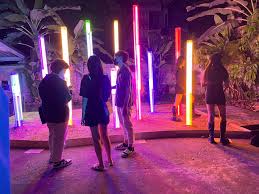
A Neon sign is a Lighting Display made of Glass Tubes that have been filled with a Gas
and bent into the shape of letters or Decorative Designs. When a high voltage Electrical
current is passed through the Gas, the Tubes Emit Light. Although Neon Gas was originally
used in these Signs, several other Gases are also used.
Raw Materials:
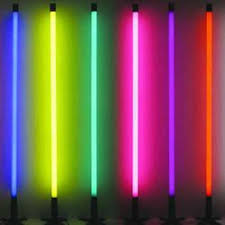
Although Neon Gas was Originally used in Neon Signs, it is now only used to produce
Reds and Oranges. Argon, or an Argon Neon Mixture, is used in most Signs. To improve
the intensity of the Light, a small amount of Mercury is added to the Argon to produce
an intense Blue Light.
Neon Design:
With only a Neon Signfew exceptions each sign is unique and must be Designed
to fit the desired Display within the Confines of the available space. Considerations
of the Diameter of the Tubing, the minimum radius the Tubing can be Bent.
Manufacturing Process:
It consists of Bending the Tubing and attaching the Electrodes, removing any
impurities from within the Tubing, then Evacuating the air and adding the Gas.
Preparing the Tubing:
Lengths of Glass Tubing are cleaned and placed vertically in a coating machine.
The Machine Blows a liquid Phosphor Suspension Upwards into the Tube and then lets
it drain back out the bottom.
The Tubes are placed Vertically: In an oven
which dries the Coating. Color Tints are applied in a similar manner. Tubes that
are to be filled with Neon to form a red or orange Light or Argon to Form
a Blue Light are left clear.
Bending the Tubing:
The Glass Tubing is carefully heated and Softened using a variety of Burners. Smaller
hand Torches are used to heat shorter lengths. Using the Asbestos template as a guide,
the Tubing is bent by hand. The Tube Benders do not wear Protective Gloves because
they must be able to Feel the heat Transfer and the degree of Softening in the Glass
to Determine the right moment to make the Bend.
Tube Bender: Attaches a short length
of flexible Hose, called a Blow Hose, to one end. The Tube Bender gently blows
into the hose to Force the Tubing back to its Original Diameter. Tubes with
restricted Diameters will not Operate Properly.
Several Sections of Glass Tubing: Most large
Neon Signs are made of several sections of Glass Tubing. To make each section,
the ends of two lengths of Tubing are heated and Spliced together. When the shape of
the Lettering or Design has been Formed for a section, an Electrode is heated and
Fused onto each end.
Glass Tubing:
A Process known as Bombarding is used to remove any impurities from the Glass,
Phosphors, and Electrodes. First the air inside the Tubing is evacuated. After the
Vacuum reaches a Certain Level, Dry air is allowed back into the Tubing until
the pressure is in the range of 0.02-0.04 inches (0.5-1.0 mm) of mercury.
Current Transformer:
A very high-current Transformer is connected to the Electrodes. For a length of Tubing
that may normally run on 25 milliamperes, 350-700 milliamperes may used for the
Bombarding Process. The high current heats the Glass to about 400°F (216°C), and the
metal electrode is heated to about 1300°F (750°C). This heating forces the impurities
out of the materials, and the Vacuum pump carries the impurities out of the system.
Filling the Tube:
Once the Tube has Cooled, the Gas inserted under low pressure. The Gas must be
free from impurities in order for the sign to operate properly and have a long life.
The Normal Fill pressure for a Tube 0.6 inches in Diameter is about 0.5 inches of
Mercury. Tubulation port is then heated and sealed off.
A Transformer: rated Slightly higher than the
normal operating current is attached to the Electrodes. The Tube should come to full
illumination within 20 minutes if Neon is used. It may take few hours for Argon.
If a small amount of Mercury is to be added to an Argon Tube, The droplet is rolled
from one end to the other to Coat the Electrodes after the aging Process.
Installation and Mounting:
Small Neon Signs are Mounted on their Framework and Wired in the shop. Larger Signs
Mounted in Pieces and put into the Building, other support structure where they are
interconnected and Wired. Large installations require months to install.
Series of Tests:
This requires a series of Tests. Neon Signs must also meet the requirements of the
National Electrical Code. Outdoor Signs must comply with Local Building codes in
their Construction and Electrical Wiring.
Wishing you all the best,
http://www.seeyourneeds.in