Nonlinear Mechanics
Nonlinear Mechanics studies mechanical systems in which the relationship between
force, displacement, stress, strain, velocity, or time is nonlinear. In such systems,
small changes in input can sometimes produce disproportionately large changes in behavior.
1. Major areas:
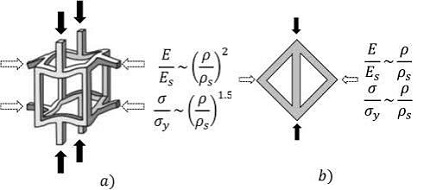
Nonlinear elasticity – large deformation and nonlinear stress–strain behavior.
Plasticity – permanent deformation after yielding.
Hyperelasticity – rubber, elastomers, biological tissues and soft materials.
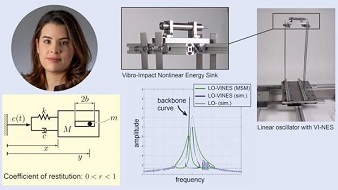
Nonlinear dynamics – oscillations, instability and complex motion.
Geometric nonlinearity – large rotations and large displacements.
Material nonlinearity – properties change with deformation, temperature or loading.
Contact mechanics – friction, impact and changing contact surfaces.
Fracture mechanics – crack initiation, propagation and nonlinear fracture behavior.
Buckling and post-buckling – structural instability beyond the critical load.
Nonlinear vibrations – systems with amplitude-dependent frequency or damping.
Fluid–structure interaction – nonlinear interaction between fluids and deformable structures.
Nonlinear wave mechanics – shock waves, solitary waves and wave interactions.
2. Important concepts:
Stress–strain nonlinearity, Large deformation, Bifurcation, Chaos,
Stability and instability, Resonance, Limit cycles, Hysteresis,
Energy methods, Perturbation methods, Finite Element Analysis (FEA).
3. Mathematical foundation:
Common nonlinear equations have the form:
$$ M\ddot{x}+C\dot{x}+Kx+f_{nl}(x,\dot{x})=F(t) $$
where \(f_{nl}\) represents nonlinear forces.
A classic example is the Duffing oscillator:
$$ \ddot{x}+\delta\dot{x}+\alpha x+\beta x^3=F\cos(\omega t) $$
The \(x^3\) term makes the system nonlinear.
4. Engineering applications:
Aircraft structures, Automotive crash analysis, Bridges and buildings,
Robotics and soft robots, Aerospace mechanisms, Earthquake engineering,
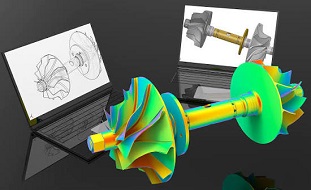
Rubber and polymer components, Metal forming, Turbomachinery,
MEMS/NEMS, Biomedical devices, Composite materials.