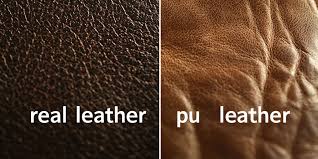
PU (Polyurethane) leather
PU (Polyurethane) leather Key Features:
Animal-free:** Commonly marketed as vegan leather because it does not use animal hides.
Soft and flexible:** More supple than many other synthetic leathers.
Water-resistant:** Resists spills and moisture better than natural leather.
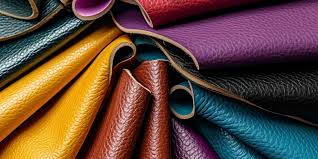
Wide variety of finishes:** Available in smooth, textured, matte, glossy, embossed, and printed designs.
Cost-effective:** Typically much less expensive than genuine leather.
Manufacturing Process:
1. A woven or non-woven fabric base is prepared.
2. A polyurethane coating is applied.
3. The surface is embossed with a leather-like grain.
4. Color, texture, and protective coatings are added.
5. The material is inspected, cut, and rolled for manufacturing.
Types of PU Leather:
Pure PU Leather:** Made entirely from a fabric base coated with polyurethane.
Split Leather + PU:** A layer of polyurethane is coated over split leather,
giving the appearance of full-grain leather.
Water-based PU Leather:** Uses water-based coatings, reducing solvent emissions during production.
Bio-based PU Leather:** Incorporates renewable raw materials to reduce reliance on petroleum.
Advantages: * Lower cost than genuine leather. * Consistent appearance and color.
* Lightweight and comfortable. * Easy to clean with a damp cloth.
* Resistant to stains and moisture. * Available in many colors and textures.
* Suitable for vegan and cruelty-free products.
Disadvantages: * Less breathable than genuine leather.
* Can crack or peel over time, especially with heavy use.
* Generally has a shorter lifespan than high-quality natural leather.
* Derived primarily from petroleum-based materials, so environmental impact
depends on manufacturing and disposal.
Applications: PU leather is widely used in:
* Furniture upholstery (sofas, chairs, office seating), * Automotive interiors,
* Fashion apparel (jackets, skirts, belts), * Footwear, * Handbags and wallets,
* Travel luggage, * Mobile and laptop covers, * Book covers, * Sports equipment,
* Hospitality and commercial interiors.
Care and Maintenance: * Wipe regularly with a soft, damp cloth.
* Use mild soap for tougher stains. * Avoid harsh solvents and abrasive cleaners.
* Keep away from prolonged direct sunlight and excessive heat.
* Avoid sharp objects that can scratch or puncture the surface.
* Store in a cool, dry place.
Market Trends: Demand for PU leather is increasing due to:
* Growing preference for animal-free materials.
* Expansion of the automotive and furniture industries.
* Improvements in bio-based and water-based PU technologies.
* Increasing use in fashion and lifestyle products.
PU leather offers a practical balance of appearance, affordability, and ease of maintenance.
While it typically does not match the longevity or aging characteristics of genuine leather,
it is a popular choice for applications where cost, design flexibility,
and animal-free materials are important.
Wishing you all the best,
http://www.seeyourneeds.in