Robotics
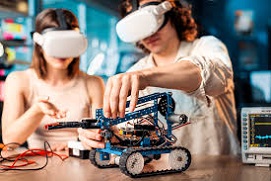
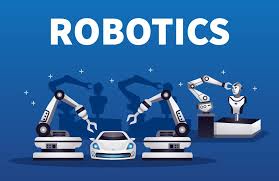
**Robotics** is the branch of engineering and science focused on designing, building, programming,
and operating **robots**—machines that can perform tasks automatically or semi-autonomously.
Robotics combines **mechanical engineering, electronics, computer science, and artificial intelligence**.
Key Components of Robotics:
1. **Sensors** – Help robots detect surroundings (cameras, infrared, touch sensors).
2. **Actuators** – Motors and mechanisms that create movement.
3. **Controller** – The “brain” that processes data and makes decisions.
4. **Power Source** – Batteries, electricity, or hydraulic systems.
5. **Software/AI** – Controls behavior, learning, and automation.
Challenges: * High initial cost, * Maintenance complexity, * Job displacement concerns,
* Limited adaptability in unpredictable environments.
Future of Robotics: Robotics is advancing with AI, machine learning, computer vision, and human-robot collaboration.
Future robots are expected to become smarter, safer, and more autonomous in homes, hospitals, factories, and transportation.
In short: **Robotics = creating intelligent machines that sense, decide, and act.**