Rubber-to-Metal Bonded Parts

Rubber-to-Metal Bonded Parts


Rubber-to-Metal Bonded Parts
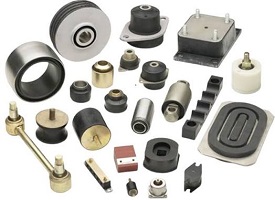
Rubber-to-metal bonded parts are engineered components in which rubber is permanently bonded
to a metal substrate using specialized adhesives and vulcanization processes. These parts combine
the elasticity and damping properties of rubber with the strength and rigidity of metal, making
them essential in automotive, industrial, aerospace, railway, and construction applications.

How They Are Made: The manufacturing process typically involves:

1. Metal Preparation: * Degreasing and cleaning, * Grit blasting or shot blasting,
* Chemical treatment or phosphating.
2. Adhesive Application: * Primer coating, * Bonding adhesive
(e.g., phenolic or epoxy-based bonding systems)
3. Rubber Molding: * Compression molding, * Transfer molding, * Injection molding.
4. Vulcanization: * Heat and pressure cure the rubber while creating a permanent
chemical bond with the metal.
Common Rubber Materials: * Natural Rubber (NR), * Nitrile Rubber (NBR), * EPDM Rubber,
* Silicone Rubber, * Neoprene (CR), * Fluoroelastomer (FKM/VitonĀ®), * Polyurethane (PU).
Metal Inserts Used: * Mild Steel, * Stainless Steel, * Aluminum, * Brass, * Cast Iron.
Surface coatings may include: * Zinc plating, * Nickel plating,
* Powder coating, * Phosphate coating.

Add: Anti-Aging Self Tanner

Types of Rubber-to-Metal Bonded Parts:
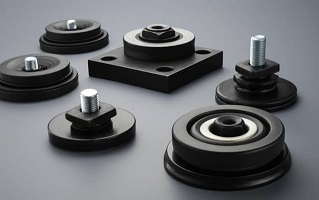
1. Anti-Vibration Mounts: Used to isolate machinery and engines from vibration.
Applications: * Industrial equipment, * Compressors, * Generators, * HVAC systems.
2. Engine Mounts: Support engines while minimizing vibration and noise.
Applications: * Cars, * Trucks, * Motorcycles, * Construction equipment.
3. Suspension Bushings: Provide flexible connections in vehicle suspension systems.
Applications: * Passenger vehicles, * Commercial vehicles, * Agricultural machinery.
4. Silent Blocks: Reduce vibration and shock in rotating equipment.
Applications: * Pumps, * Fans, * Industrial motors.
5. Rubber Rollers: Metal cores coated with rubber for conveying or processing.
Applications: * Printing, * Textile, * Paper, * Packaging.
6. Seals with Metal Reinforcement: Rubber sealing elements bonded to metal rings.
Applications: * Hydraulic systems, * Automotive transmissions, * Oil seals.
7. Flexible Couplings: Transmit torque while compensating for misalignment.
Applications: * Pumps, * Compressors, * Industrial drives.
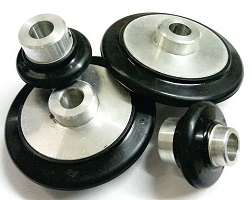
8. Tracks and Wheels: Metal hubs bonded with rubber treads.
Applications: * Material handling, * Robotics, * Agricultural machinery.

Add: Control Heart Burn

Advantages: * Excellent vibration isolation, * High shock absorption, * Strong and durable bond,
* Noise reduction, * Increased service life, * Resistance to fatigue,
* Corrosion protection (with coated metal), * Maintenance-free operation in many applications.

Limitations: * Higher manufacturing cost than non-bonded assemblies,
* Difficult to repair once the bond fails, * Performance depends on proper surface preparation,
* Rubber may degrade under extreme temperatures or chemical exposure,
* Bond strength can be affected by poor processing conditions.

Applications: Automotive, * Engine mounts, * Suspension bushings,
* Transmission mounts, * Exhaust hangers.
Industrial Machinery: * Vibration isolators, * Machine feet,
* Flexible couplings, * Conveyor rollers.
Construction Equipment: * Cab mounts, * Shock absorbers, * Suspension components.
Railways: * Track pads, * Suspension elements, * Vibration dampers.
Aerospace: * Aircraft vibration isolators, * Engine support components.
Marine: * Engine mounts, * Pump supports, * Propulsion system isolators.

Add: Experience Relief from Sciatica

Quality Tests: Manufacturers commonly perform: * Bond strength (adhesion) test,
* Peel test, * Tensile strength test, * Compression test, * Shear strength test,
* Hardness (Shore A) test, * Fatigue testing, * Salt spray corrosion test,
* Thermal aging test, * Oil and chemical resistance test, * Dynamic vibration testing.

Typical Industries Served: * Automotive, * Aerospace, * Railways, * Marine, * Mining, * Agriculture,
* Construction, * Oil & Gas, * Power Generation, * Industrial Equipment Manufacturing.

Summary: Rubber-to-metal bonded parts are high-performance components designed to combine
the flexibility, damping, and sealing properties of rubber with the structural strength
of metal. They are widely used for vibration isolation, shock absorption, sealing, and
load-bearing applications across industries. Proper material selection, surface preparation,
adhesive systems, and controlled vulcanization are critical to achieving durable,
reliable bonds and long service life.

Add: NeuroVera


Wishing you all the best,
http://www.seeyourneeds.in