Software as a Service (SaaS)
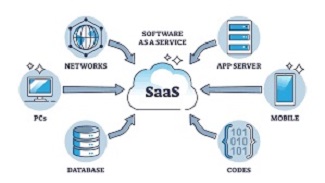
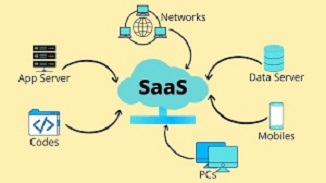
**Software as a Service (SaaS)** is a cloud-based software delivery model where applications are hosted
by a provider and accessed over the internet, usually through a web browser. Users subscribe to the software
instead of purchasing and installing it on their own computers.
Key Characteristics:
* **Cloud-hosted:** Runs on remote servers.
* **Subscription-based:** Monthly or annual payment plans.
* **Accessible anywhere:** Requires an internet connection.
* **Automatic updates:** Provider handles maintenance and upgrades.
* **Scalable:** Users can easily increase or decrease usage.
How SaaS Works:
1. A software provider hosts the application in the cloud.
2. Users access the application through a browser or mobile app.
3. The provider manages infrastructure, security, updates, and backups.
4. Customers pay a subscription fee for access.
Advantages: * Lower upfront costs, * Easy deployment and maintenance,
* Access from any location, * Automatic backups and updates, * Rapid scalability.
Disadvantages: * Requires internet connectivity, * Limited control over infrastructure,
* Potential data privacy concerns, * Vendor dependency (vendor lock-in).
Common SaaS Business Models: * Freemium (free basic version with paid upgrades),
* Subscription-based, * Pay-per-use, * Tiered pricing.
Future Trends: * AI-powered SaaS applications, * Industry-specific (vertical) SaaS solutions
* Increased automation and analytics, * Enhanced security and compliance features
* Integration with cloud and IoT ecosystems.
SaaS has become one of the most widely adopted software delivery models because it reduces infrastructure
costs and enables organizations to deploy applications quickly and efficiently.