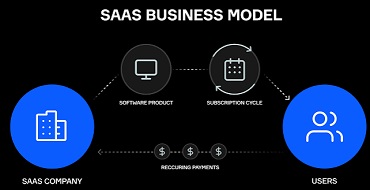
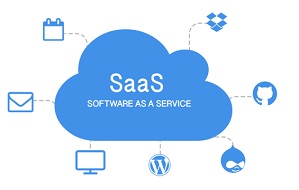
SaaS (Software as a Service) businesses provide software through the internet,
usually on a subscription or recurring-payment model. Customers access the
software online instead of buying and installing it permanently.
Recurring revenue: customers pay monthly or annually.
Scalable: one software product can serve thousands of customers.
Low marginal cost: serving another digital customer can be relatively inexpensive.
Global market: software can often be sold internationally.
Automation: onboarding, billing and support can be increasingly automated.
Predictable revenue: subscriptions can make future revenue easier to forecast.
Important SaaS metrics:
MRR = Monthly Recurring Revenue, ARR = Annual Recurring Revenue
CAC = Customer Acquisition Cost, LTV = Customer Lifetime Value
Churn = Percentage of customers/revenue lost, ARPU = Average Revenue Per User
A strong SaaS business generally aims for high retention, low churn,
efficient customer acquisition and growing recurring revenue.
SaaS business model example:
Suppose you create an AI invoicing SaaS for small businesses:
Free plan → limited invoices, Basic → ₹499/month, Professional → ₹1,499/month,
Business → ₹4,999/month, Enterprise → custom pricing.
If 1,000 customers average ₹1,000/month, that produces approximately ₹10 lakh in MRR,
before expenses, taxes, refunds and other adjustments.
Best opportunities for a new SaaS:
For a small founder, I would particularly consider vertical SaaS—software
designed for one specific industry rather than trying to compete with huge
general-purpose platforms.