Silicone Keypads

Silicone Keypads


Silicone Keypads
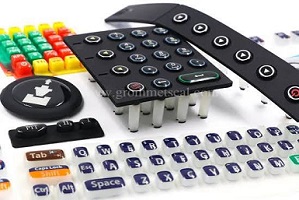
Silicone keypads (also called rubber keypads or elastomeric keypads) are flexible input
devices made primarily from silicone rubber. They are widely used in consumer electronics,
industrial equipment, medical devices, automotive controls, and telecommunications because
they are durable, comfortable to press, and can be customized extensively.

Construction:
A typical silicone keypad consists of:
* Silicone Rubber Body – Provides flexibility and resilience.
* Key Tops – Raised buttons with custom shapes and symbols.
* Conductive Pill – Carbon or gold-filled silicone on the underside of each
key that closes the electrical circuit.
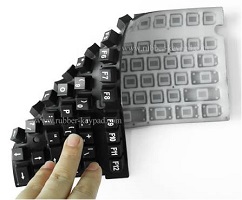
* Webbing – Thin silicone sections that provide the key's tactile response.
* Protective Coatings – Improve wear, chemical, and UV resistance.

How It Works: 1. The user presses a key. 2. The silicone web collapses.
3. The conductive pill contacts the PCB traces. 4. The electrical circuit closes.
5. The device registers the input. 6. Releasing the key allows the silicone
to return to its original position.

Add: Anti-Aging Self Tanner

Materials: * Silicone Rubber (VMQ), * Conductive Carbon Silicone, * Gold Conductive Silicone,
* Fluorosilicone (for harsh chemical environments), * Medical-grade Silicone.

Manufacturing Process: 1. Mold design, 2. Compression or injection molding, 3. Post-curing,
4. Printing legends (silkscreen or laser), 5. Protective coating application,
6. Conductive pill insertion (if separate), 7. Quality inspection, 8. Functional testing.

Types of Silicone Keypads:
Standard Keypads: * Cost-effective, * General-purpose applications.
Backlit Keypads: * Laser-etched legends, * LED-compatible, * Night-time visibility.
Industrial Keypads: * Dust and water resistant, * Heavy-duty operation
Medical Keypads: * Easy to disinfect, * Biocompatible materials, * Hygienic design.

Add: Control Heart Burn

Metal Dome Hybrid Keypads: * Silicone overlay with metal domes,
* Crisp tactile feedback, * Long operating life.

Surface Finishes: * Matte, * Glossy, * Soft-touch, * Textured, * UV-resistant,
* Anti-microbial coating, * Scratch-resistant coating.
Printing & Marking Options: * Silk-screen printing, * Laser etching, * Pad printing,
* Epoxy-coated legends, * Multi-color printing.
Key Features: * Excellent tactile feel, * Quiet operation, * Waterproof and dust-resistant,
* Long service life, * Flexible design options, * UV resistant, * Chemical resistant,
* Temperature resistant, * Lightweight, * Non-toxic, * Easy to clean.
Advantages: * Low manufacturing cost for medium to high volumes,
* High durability, * Excellent environmental resistance, * Comfortable user experience,
* Attractive appearance, * Custom colors and shapes, * Easy integration with PCBs,
* Reliable electrical performance.
Limitations: * Lower precision than mechanical keyboards,
* Tooling costs for custom molds,
* Conductive pills may wear over very long lifetimes,
* Not ideal for extremely high-speed typing.

Add: Your Family Is 72 Hours Away From Chaos

Applications:
Consumer Electronics: * Remote controls, * Calculators, * Home appliances,
* Smart home devices, * Gaming controllers.
Industrial Equipment: * Control panels, * Machine interfaces, * Test instruments,
* Process controllers.
Medical Devices: * Patient monitors, * Diagnostic equipment,
* Infusion pumps, * Portable medical instruments.
Automotive: * Steering wheel controls, * Dashboard buttons,
* HVAC controls, * Key fobs.
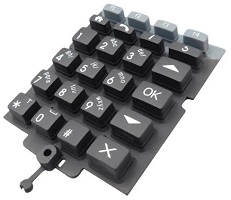
Telecommunications: * Telephone keypads, * Radio communication equipment,
* Network devices.
Security Systems: * Access control panels, * Alarm systems, * Digital locks.

Design Considerations: * Key spacing and size, * Tactile force, * Travel distance,
* Backlighting requirements, * Environmental sealing, * Chemical exposure,
* UV resistance, * Legend durability, * PCB contact layout, Ergonomics.

Add: Forex Gann 4EX Strategy

Common Failure Modes: * Worn conductive contacts, * Faded legends,
* Torn silicone webbing, * Loss of tactile feedback, * Chemical degradation,
* UV aging, * Contamination under the keypad.
Testing Methods: * Actuation force testing, * Contact resistance testing,
* Life-cycle testing, * Environmental testing, * Temperature cycling,
* Salt spray testing, * UV exposure testing, * Abrasion testing, * Waterproof testing.
Industries Using Silicone Keypads: * Electronics, * Automotive, * Aerospace, * Healthcare,
* Industrial automation, * Consumer appliances, * Defense, * Marine, * Telecommunications,
* Security systems.

Silicone keypads remain one of the most widely used human-machine interface solutions because
they combine durability, environmental resistance, customizable aesthetics, and reliable tactile
performance while remaining cost-effective for medium- and high-volume production. They can also
be engineered with features such as backlighting, waterproof sealing (up to IP67/IP68 with proper
enclosure design), laser-etched legends, and antimicrobial coatings
to meet demanding application requirements.

Add: Power of Market Balance


Wishing you all the best,
http://www.seeyourneeds.in