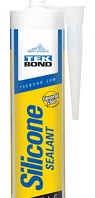
Silicone Sealants
Silicone sealants are flexible, rubber-like materials used to seal joints, gaps, and surfaces
against air, water, dust, chemicals, and weather. They are made from silicone polymers and are
widely used in construction, automotive, electronics, industrial manufacturing, and household
applications due to their excellent durability and flexibility.
Key Properties: Excellent flexibility – Maintains elasticity even after curing.
Waterproof – Creates a durable, watertight seal.
Weather resistant – Resists UV radiation, rain, ozone, and temperature extremes.
Temperature resistance – Typically withstands -50°C to 250°C, with specialty grades
handling even higher temperatures.
Chemical resistance – Resistant to many chemicals, oils, and solvents.
Long service life – Can last 20 years or more in many applications.
Good electrical insulation – Suitable for electronic applications.
Advantages: * Excellent UV resistance, * Waterproof and weatherproof,
* High flexibility, * Wide operating temperature range, * Strong adhesion to many materials,
* Low maintenance, * Long-lasting performance, * Resistant to aging and cracking.
Limitations: * Difficult to paint after curing.
* Some grades have limited adhesion to certain plastics.
* Surface preparation is important for optimal bonding.
* Generally more expensive than acrylic sealants.
* Not suitable for structural bonding unless specifically formulated.
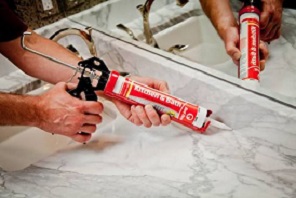
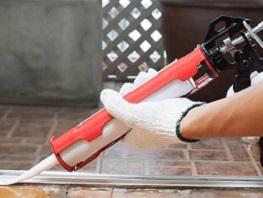
Curing Process: 1. Clean and dry the surface. 2. Apply the sealant using a caulking gun.
3. Tool the bead to achieve a smooth finish.
4. Skin forms within 5–30 minutes (depending on formulation).
5. Full cure typically occurs within 24–72 hours, depending on bead thickness, humidity, and temperature.
Comparison with Other Sealants:
| Property | Silicone | Polyurethane | Acrylic |
| ---------------------- | ------------- | ------------ | -------- |
| Flexibility | Excellent | Very Good | Moderate |
| UV Resistance | Excellent | Good | Moderate |
| Paintable | No | Yes | Yes |
| Waterproof | Excellent | Excellent | Good |
| Outdoor Durability | Excellent | Very Good | Moderate |
| Temperature Resistance | Excellent | Good | Moderate |
| Cost | Moderate–High | Moderate | Low |
Major Manufacturers: Some of the leading manufacturers of silicone sealants include:
* Dow, * Wacker Chemie, * Momentive Performance Materials, * Shin-Etsu Chemical,
* Sika, * Henkel, * 3M.
Industries That Use Silicone Sealants:
* Construction and infrastructure, * Automotive manufacturing, * Aerospace, * Marine,
* Electronics and electrical, * Renewable energy (solar and wind), * Medical devices,
* Food processing equipment, * Consumer appliances.
Silicone sealants are among the most versatile sealing materials available, offering
exceptional flexibility, weather resistance, and durability. Their ability to maintain
performance across a wide temperature range and in demanding environments makes them
a preferred choice for both residential and industrial applications.