How Silver is made
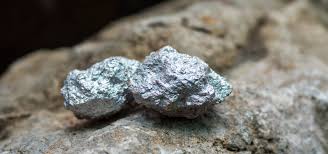
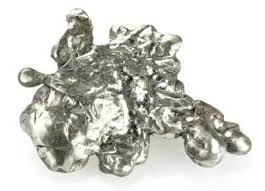
It is usually found in ores with less rare metals, such as copper, lead, and zinc, silver was apparently
discovered in nugget form, called native silver. In more recent times, the principal uses for silver were
coinage and silverware.
Physical Characteristics and Uses of Silver:
Silver is resonant, moldable, malleable, and possesses the highest thermal and electric conductivity
of any substance. The chemical symbol for silver is Ag, which means white and shining. Although silver
does not react to many chemicals, it does react with sulfur, which is always present in the air,
even in trace amounts. The reaction causes silver to tarnish, therefore, it must be polished
periodically to retain its luster.
Preparing the ore:
1 Silver ore is crushed into pieces, usually with 1-1.5 in (2.5-3.75 cm) diameters, to make the material
porous. Approximately 3-5 lb (1.4-2.3 kg) of lime per ton of silver ore is added to create an alkaline
environment.
Silver The ore must be completely oxidized so the precious metal is not confined in sulfide
minerals. Where fines or clays exist, the ore is agglomerated to create a uniform leach pile.
2 Broken or crushed ore is stacked on impermeable pads to eliminate the loss of the silver cyanide solution.
Pad material may be asphalt, plastic, rubber sheeting, and/or clays. These pads are sloped in two directions
to facilitate drainage and the collection of the solutions.
Adding the cyanide solution and curing:
3 A solution of water and sodium cyanide is added to the ore. Solutions are delivered to the heaps by
sprinkler systems or methods of ponding, including ditches, injection, or seepage from capillaries.
Recovering the silver:
4 Silver is recovered from heap leach solutions in one of several ways. Most common is Merrill-Crowe
precipitation, which uses fine zinc dust to precipitate the precious metal from the solution.
The silver precipitate is then filtered off, melted, and made into bullion bars.
5 Other methods of recovery are activated carbon absorption, where solutions are pumped through tanks
or towers containing activated carbon, and the addition of a sodium sulfide solution, which forms
a silver precipitate. In another method, the solution is passed through charged resin materials
which attract the silver. The recovery method is generally decided based on economic factors.
Wishing you all the best,
http://www.seeyourneeds.in