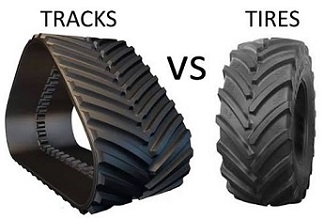
TiresTracks
Tires and tracks are critical mobility components used in vehicles, heavy machinery, agricultural
equipment, military vehicles, and industrial machines. They provide traction, stability, load-bearing
capacity, and efficient movement across different terrains.
Tires: A tire is a rubber covering fitted around a wheel to provide grip, cushioning, and durability.
Types of Tires:
1. **Passenger Car Tires: * Used in cars, SUVs, and crossovers.
* Designed for comfort, fuel efficiency, and handling.
2. **Truck and Bus Tires: * Built for heavy loads and long-distance transportation.
* High durability and wear resistance.
3. **Agricultural Tires: * Used on tractors, harvesters, and sprayers.
* Deep treads improve traction while minimizing soil compaction.
4. **Off-Road (OTR) Tires: * Used in mining, construction, and quarry equipment.
* Thick sidewalls resist cuts and punctures.
5. **Industrial Tires: * Used on forklifts, cranes, and warehouse vehicles.
* Available as pneumatic or solid tires.
6. **Motorcycle and Bicycle Tires: * Designed for speed, grip, and maneuverability.
Advantages: * Comfortable ride, * High speed capability, * Good road grip,
* Fuel-efficient designs available, * Wide variety for different applications.
Limitations: * Susceptible to punctures, * Wear over time,
* Performance varies with weather, * Requires regular maintenance.
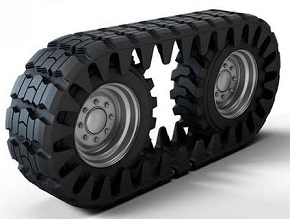
Tracks: Tracks (continuous tracks or caterpillar tracks) are continuous belts made
from rubber or steel that distribute vehicle weight over a larger surface area.
Types of Tracks:
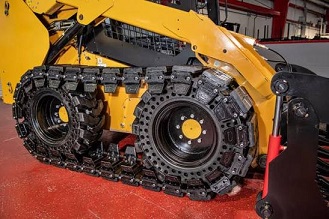
1. **Rubber Tracks: * Used in compact excavators, skid steers, and agricultural machinery.
* Quiet operation and reduced ground damage.
2. **Steel Tracks: * Used in tanks, bulldozers, and large excavators.
* Excellent durability on rough terrain.
3. **Hybrid Tracks: * Combine steel reinforcement with rubber.
* Offer durability and smoother operation.
Summary: Tires are the preferred choice for high-speed, fuel-efficient travel on paved roads,
while tracks excel in demanding off-road environments by providing superior traction, stability,
and lower ground pressure. The choice between tires and tracks depends on the vehicle's operating
conditions, load requirements, terrain, and maintenance considerations.