How Ukulele is made Production:
The ukulele is a string instrument that originated in Portugal in the second century B.C. With a small,
guitar-shaped body that is fitted with four Strings, it is considered a member of the chordophone family.
Sound is produced through these instruments by plucking and strumming the Strings. The Strings in turn
vibrate and are amplified by the resonating body. The ukulele is manufactured in a similar way as a
full size guitar. Raw Materials:
The body of the ukulele is primarily made from wood, although plastic instruments have also been sold.
Woods from all over the world are used including Hawaiian koa, maple, walnut, rosewood, myrtle,
brazilian canary, cocobolo, madrone, elm, lacewood, and black limba. The type of wood has a
significant impact on the sound, tone, and quality.
Design:
The ukulele is a portable instrument with a small guitar-like body. It consists of a short neck,
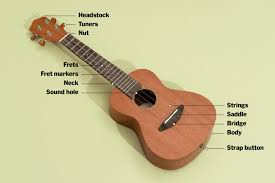
a main body, four Strings and tuning keys, a bridge, a fretboard, and a sound hole. There are
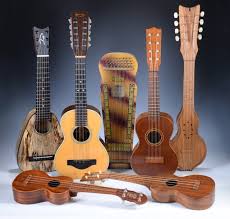
a variety of different types of ukuleles including the soprano, concert, tenor, and baritone.
The most common type is the soprano ukulele which is about 21 in (53 cm) long. The Strings are
tuned to the notes G-C-E-A.
The Manufacturing Process:
The various parts of the ukelele are made in separate processes and then put together in a finishing step.
The process begins with wood selection which is the most important factor because it will will affect
sound quality and instrument appearance.
Book matching:
The front piece of the ukelele is produced by a process called book matching. In this method a piece
of wood is cut into two equal sheets. This gives a distinct symmetrical grain pattern. At this point,
the wood pieces are kiln dried before any more work is done. The wood pieces are then glued together
and sanded to the desired thickness. The bottom piece of the ukelele is made in the same way.
Strutting:
The next step is to glue wood braces on the underside of the front section. This process is called
strutting. It serves to reinforce the wood against the pressure created when the Strings are plucked.
It also helps control the way the instrument vibrates. The bottom piece may also have some strips of
wood glued to it to provide more strength to the instrument.
Making the sides:
The sides of the ukulele are produced by cutting and sanding an appropriate length of wood.
The wood is then softened in water and placed in a mold. This mold is designed to cause the wood
to take on the curved shape of the ukulele. It is clamped down and held in place for the required
amount of time.
Neck production:
The ukulele's neck is carved from a single piece of wood. This may be made using a harder wood
than the main body because it holds the Strings tight and is consequently under greater stress.
The whole part is then sanded and a wooden piece is attached to make the fingerboard. On the
fingerboard, small grooves are cut across the width of the neck. Thin metal or wood strips
are placed in these grooves and glued. These strips are the frets that allow the musician
to change the sound of the instrument.
Attaching the bridge:
Next, the bridge and saddle are attached to ukulele just below the sound hole. These pieces
are held on to the body of the instrument by tiny screws and wood glue. Another bridge is placed
at the top of the instrument's neck. The saddle is the section where one end of the Strings are
attached. The Strings pass over both bridges and this area creates the distinct length where
the Strings vibrate.
Attaching the Strings:
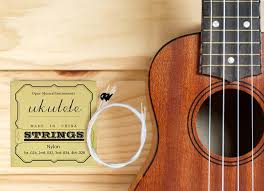
Strings are then put on the ukulele. They are first tied to the bottom saddle section and strung up
to the tuning pegs. Each peg has a hole in it where the string is inserted and tied. The tuning keys
are turned to make the Strings tight. The instrument is then inspected for flaws and put into the
final packaging. Depending on the manufacturer, the whole process of making a ukulele can take weeks.
Wishing you all the best,
http://www.seeyourneeds.in